


When parents receive an autism diagnosis for their two-, three-, or four-year-old child, their immediate instinct is to do whatever it takes to save them. Well-meaning doctors and professionals frequently recommend that families enroll their toddlers in intensive clinical programs, sometimes scheduling them for therapy eight to nine hours a day.
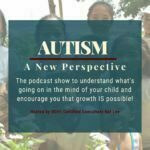
But in a recent episode of the Autism: A New Perspective podcast, host Kat Lee and Dr. Sheely discussed a hard truth about this approach: you cannot outsource the parent-child guiding relationship. While therapies can offer support, putting a toddler in an intensive, full-time clinical setting often robs parents and children of the essential time they need to connect.
The “Procurement of Services” Mold
Dr. Sheely notes that society as a whole has fallen into a “procurement of services” mindset. We see this across the board, not just in the autism community. Children are frequently overscheduled with early morning swim meets, school, afternoon tennis lessons, and hours of homework.
For a neurodivergent child, this lack of downtime is a disaster. Without the space to naturally interact with their parents—to share excitement, practice joint attention, and engage in co-regulatory activities—they lose the opportunity to develop a meaningful, guiding relationship.
A Relationship with Information vs. People
One of the most profound insights from Dr. Sheely is how intense, repetitive therapeutic protocols change a child’s worldview. When a program is run entirely on rigid prompts—”say it, and say it quickly”—the child does not build a relationship with the therapist or the parent. Instead, they build a relationship with static information.
An unpublished study mentioned in the episode compared children in intense, protocol-driven therapies with those in the Relationship Development Intervention (RDI®) program. While both groups learned skills like joint attention and vocabulary, the children in the intense protocols stopped using those skills once the therapy ended. The RDI® children, however, continued to grow and use conversational language because their development was rooted in a genuine, trusting relationship rather than a rehearsed transaction.
Protecting the Resource of Time
To build this kind of lasting connection, parents need time. We often hear the phrase, “It’s not the quantity of time, it’s the quality.” But as Dr. Sheely points out, the quantity of time absolutely matters.
If you want to build trust with a highly vulnerable child, you cannot rush it. Squeezing in a 15-minute window to frantically bond over dusting the furniture will only end in exasperation for both the parent and the child. Parents need the breathing room to observe, analyze, and innately understand why their child does what they do.
Building Trust for the “Next Step”
When a child struggles to access a parent’s guidance, it is not because the child doesn’t love the parent. It is simply the autism creating a barrier. To break through that barrier, parents must establish profound trust.
In the RDI® framework, trust means the child believes the parent will safely guide them to the next developmental step—the “zone of proximal development.” The parent learns to introduce a challenge that is slightly different from what the child knows, but not so difficult that it overwhelms them.
Slow Down to Go Faster
As Kat Lee reminds us, the RDI® community relies on a powerful slogan: Slow down to go faster.
To guide your child effectively, you must step off the relentless treadmill of services and therapies. Protect your time, prioritize your connection, and give yourselves the grace to build a relationship that will support your child’s growth for a lifetime.
Learn More and Get Connected
Want to learn more about the RDI® approach and how it supports meaningful relationships and long-term development? Click here to discover more about RDI® and connect with a certified consultant who can walk with you on your journey.
Full Transcript
Kat Lee: Welcome back to Autism, A New Perspective, the podcast show where we help you understand what is going on in the mind of your child. And we always encourage you that growth for your child is possible. I’m Kat Lee, and in this week’s podcast, I visited with Dr. Sheely as we talked about parenting today and finding time to guide. Let’s listen in. One thing I talked to parents about, Dr. Sheely, and honestly, other professionals, and not just in RDI, is that children are getting this diagnosis early, two years old, three years old, four years old, and then really being recommended that they go to clinics where they’re spending 40 hours a day or eight to five or nine to six or whatever. And then once they’re to school age, then they’re going to school.
And I think it’s so important for us to talk about the foundation of RDI, which is parents having the guiding relationship and how other professionals can help, but that their relationship is important. And I was thinking this morning when I was getting ready to talk to you, I was like, we talk about how important the relationship for the child, but it’s also important for the parents to have that meaningful guiding relationship with a child. Let’s talk about the value that has for a parent.
It’s just, for me, it’s talking about their heart, that they can guide their child. What do you think?
Dr. Rachelle Sheely: Katherine, I do agree with you. And I’m not sure how as a society we got into this mold of procurement of services. And I’m not just talking about children with autism or ADHD.
I’m talking about children who are, young children, who are at seven o’clock before they go to school, going to the swim meet, and then after school, tennis lessons, and after tennis lessons, something else. And the children are exhausted, plus three hours of homework. So this isn’t even, I’m not even talking right now about children with autism.
But I see the problem being across the board, not just in the field of autism. For our children, the inability to have a guiding relationship where the child is developmentally hanging on what’s going on with the parent, joint attention, thinking about things, getting excited, emotion sharing, for our children is a disaster. And there’s no way to sugarcoat it.
If children don’t have this relationship with the parent, the relationship they’re going to end up having is with the static information, not even the information with the person who’s teaching it to them. Because run correctly, not correctly in my mind, but run correctly, it’s say it and say it quickly. So the children have a relationship with information, but they don’t have that relationship with the therapist, nor do they have it with their parent.
And sometimes parents get confused by this, and think, oh, he really hugs me all the time. We’re not saying the child doesn’t love the parent. We’re saying that the child cannot access the guidance that he needs from the parent.
And the reason he can’t is because of the autism, not because the parents don’t know what to do, but because the child can’t access it.
Kat Lee: I’m so glad you talked about that. It’s not that the child doesn’t love the parent, because I do know that parents can sometimes feel that way. So I really appreciate you for saying that.
But I also think one thing you and Dr. Gutstein train into us as consultants is there needs to be a time to guide. So time becomes such a valuable resource in order to be able to guide. And I think when our children are out in all these different therapies and activities, that time to guide, there’s just not a lot of time.
And that’s why we spend so much time being trained to help parents find time, Dr. Sheely.
Dr. Rachelle Sheely: I think it’s one of the most important things we do. And it’s not often taken that seriously, because it’s like, let’s just take a look at your schedule and figure out how we’re going to squeeze it in. That’s not what we’re looking for.
We’re looking for a time when the parent feels qualified. They feel qualified. I can do this.
Where the child feels rested and they come together, and whether they’re doing the meal for dinner or dusting the furniture or just sitting together and doing some little co-regulatory issues or interactions, the time is important. And we used to have this saying years ago, and they say, it’s not the quantity of time, it’s the quality of time. But the truth is, it is also the quantity of time.
You have to be there. If you want to get to know somebody, you want that person to trust you, particularly a child who’s so vulnerable. You want trust from that child.
You have to intimately begin to innately understand why the child does what he does and why you do what you do. What are your points of exasperation? And so that trusting, having the time to do it and not being rushed.
Okay, I’ve got 15 minutes. Let’s do dusting the furniture. Hurry up.
We need to dust the furniture. Let’s do it this way. Let’s do it together.
You’ve got a disaster on your hands. Thinking, I keep trying to do these things and they don’t work. I wonder why.
Well, it is the quantity of time as well. I mean, have you run into that as well, Katherine?
Kat Lee: Well, yes. And I always think about another slogan that we’ve had, which is slow down to go faster. And you can’t slow down if you don’t have time.
I mean, time is such a valuable resource. And I don’t think I’m telling anybody anything they don’t know. That as a valuable resource, there’s also a limited amount of it.
And so for that reason, I think we have to protect it. And we have to honor it in some kind of way where we say, well, I love what you just said. If you’re going to have a relationship with anyone, you have to have time in order to, for them to know you and for you to know them, that’s anyone, much less you’re a child.
And so I do understand, though, that when parents receive this information about their two, three, four-year-old from a doctor, there’s an instinct to try to save them. And if the way they’re being told to save them, by very well-meaning people, is to put them here, have them do this with the child, I don’t want to take away from that feeling that the parents will have. I think what we’re saying is, but you also, they need that relationship with you.
They need to have that time with you, and that cannot be replaced by someone else.
Dr. Rachelle Sheely: You know, I recently came across an unpublished article, and the article was looking at this kind of intense, this intense protocol we put our children through, and they were comparing it to RDI. And what they found is that the children who were in this intense experience were doing some very interesting things. They were actually looking at, they were using joint attention, they were acquiring words.
But the difference was, after that stopped, and after RDI stopped, the kids who had done RDI were still doing it. And the kids who had had this intense experience, and who were doing it, not because of the relationship, but because the protocol said, you say this is what will happen if you, you know, if you show joint attention, which was being taught, not part of developmentally where someone was. And I was so, I was so touched to see that because the parents had been doing the work, I’m sure they were continuing to do what they were doing.
And the children continued to grow with the joint attention, not only just acquisition of language, but conversational language, because of that emphasis we put on communication. So all of this brings me back again to this issue of trust, which I’ve been thinking about for a while. There’s just like we say, we know our children love us.
And it’s very hard to say, you mean my child might not trust me? Think how big that is. But when we talk about trust, we’re talking about the ability to actually look at where the child is, and what’s the next step for that child, something that will challenge the child, but not overwhelm them.
And that’s what RDI does. It teaches the parents to ask the question, what’s the next step? You know, and that we’re talking about that zone of proximal development, where it’s like, this is the next step.
Oh, that’s different, but I know what to do. And that’s the kind of trust we’re talking about. That’s why our consultants are so valuable, because they’re constantly looking, analyzing, and creating hypotheses.
I bet if we do this, we’ll see this.
Kat Lee: And that is the hope of RDI. And I love, love, love what you say, which is it’s not pie in the sky hope. And thanks for joining us for Autism, A New Perspective, the podcast show where we help you understand what is going on in the mind of your child.
And we encourage you that growth for your child is possible. I’m Kat Lee. See you next time.

0 Comments